Wednesday, July 11, 2007

Streepathon Stop #9: The River Wild

"I'm gonna kill you. (pause) I'm gonna kill you, Wade." -Gail Hartman

Time: 1994 (21st film)

Role: Gail Hartman, badass whitewater rafter, wife and mother

Awards: GG (drama) and SAG award nominations

Fun Fact #1: Streep's performance in this film earned her golden globe and SAG nominations, but no corresponding oscar nod; this was one of the few high-profile snubs of her career (the only others were for The Hours and, to a lesser extent, The Manchurian Candidate).

Fun Fact #2: This film was not the first time Streep had worked with David Strathairn (who plays her husband); he'd previously played one of Karen Silkwood's co-workers in Silkwood.

Fun Fact #3: Carrie Fisher, who wrote Postcards from the Edge (Streep's last oscar nomination before The River Wild), served as an uncredited script doctor on River.

Fun Fact #4: One day during filming, director Curtis Hanson encouraged Streep to film an additional scene at the end of the day despite her fatigue, and she reluctantly agreed, despite her reservations. Then, she nearly drowned after being thrown from her raft. After she was rescued from the water, she reportedly told Hanson: "In the future, when I say I can't do something, I think we should believe me" (Hanson agreed).

Peep show poster? One of the film's Asian posters catches Streep skinny dipping, and an a voyeuristic Kevin Bacon watching from afar. Hmmm...

Film Review: This was an enjoyable flick, nothing too special, but lots of fun, thanks to impressive performances by Streep, Strathairn and Bacon (golden globe nominated), pretty scenery, and thrilling rafting sequences. The film starts off rather slow (before the rafting starts), but it picks up before too long. That I started watching it at 1am this morning and didn't feel the need to turn it off and go to sleep 'til it was done is testament to the film's watchability.

The story concerns 40ish wife, mother, and history teacher Gail Hartman (a rather weathered-looking Streep, who seemed no younger then than she does now, 13 years later) who takes her family on a whitewater rafting trip in an area where she used to be a guide. Gail is just a mild-mannered history teacher by day, but by weekend, she's a badass whitewater rafter. Her husband Tom (David Strathairn) is mild-mannered ALL the time; he's a workaholic architect who doesn't share her passion for the outdoors. Gail and Tom are estranged when the story begins - he works all the time, she feels neglected - but after Tom decides at the last minute to join Gail and their son, Roarke (Joseph Mazzello, of Jurassic Park fame) on a getaway for the weekend, the couple end up rebonding in a fight for their lives.

Said fight ensues when sketchy drifter Wade (Kevin Bacon, quite charismatic and scary) and his sidekick Terry (John C. Reilly) attach themselves to the family and demand that Gail get them down the river via a dangerous spread of rapids called "The Gauntlet"; they've just robbed somewhere nearby, and need to get away by a non-traditional route. Bacon's performance as the dangerous and psychopathic but initially likeable Wade is all kinds of fun; Wade first grows close to the family through his attention to young Roarke, but there's an implied attraction between him and Gail as well (at least before he reveals himself as a psycho). Reilly is also effective in his dopey sidekick role, but Bacon really steals the show as the villain you love to hate (and love to picture naked even more).

The film seems less impressive after the fact than it does while you're watching. It employs the standard thriller tropes, sometimes effectively, sometimes less so. And there's one rather large plot hole of which I became aware via the IMDB boards. The film sometimes rides the edge of kitch with its made-to-order thriller music, borderline-cartoonish villains, and even a family dog who narrowly escapes being shot by Wade and then returns later to help save the day. But it's really very entertaining nonetheless. I had a great time with this one, as would any fan of Streep, Bacon or rafting. Plus, Meryl Streep gets to hit people with ores. You can't beat that (really, you can't... it's AWESOME).

Streep Review: Oh, Meryl, how I love thee. It's the early 90s, you've conquered the world of drama, perfected every accent imaginable, played characters from Denmark, Africa, Australia, England, Poland, and middle America. You've even made successful forays into comedy. But you think oscar may have gotten his fill of you, since you haven't been nominated in (gasp!) four years. So what do you? You go, "f**k it, I wanna be in an ACTION movie!"

OK, well maybe she never actually said THAT, but I still love that Meryl decided to dive head-first into the action/suspense/thriller genre. Seeing badass Gail Hartman brave the rapids, beat down her foes with ores, and then cuddle with her young son reminded me of Meryl's old classmate Sigourney Weaver and her fierce maternal love in Aliens (which I just bought on amazon, btw... it was on sale). In fact, someone like Sigourney would seem a more obvious choice for this role (tough-and-fierce-but-always-loving mother), but it was great fun to see Meryl try her hand at it. Her trademark vulnerability and silliness added unexpected layers to the often tough-as-nails Gail.

This isn't one of her very best performances - that is to say, it's not a Sophie's Choice, Silkwood or Angels in America - but it fits right in with her great ouvre of dramatic work. Plus, she gets to hit people with ores. Did I say that already? It bears repeating. Gail Hartman is SUCH a badass. Actually, one could argue that Meryl's persona, even as chameleonic as it is, was not quite suited to such an action-based role. But it was an admirable stretch, and I think she pulled it off. I don't know 1994's slate well enough to say whether she deserved the oscar nod she was denied, but I certainly wouldn't have minded if she'd made it. In any case, she would return to the oscars in a big way the following year with...

Next in the marathon: The Bridges of Madison County

Labels: , ,

Friday, July 06, 2007

Streepathon Stop #8: Death Becomes Her

"Wrinked, wrinked little star... hope they never see the scars."
-Madeline Ashton

Time: 1992 (19th film)

Role: Madeline Ashton, endlessly vain and endlessly "undead" actress

Awards: GG (comedy) and Saturn Award nominations

Fun Fact #1: Meryl once said in an interview that she'd originally assumed Goldie Hawn's role was meant for her, not the singing, dancing, vampy part of Madeleine.

Fun Fact #2: Meryl Streep and Goldie Hawn were looking for a movie to do together in the early '90s, and at once point were interested in Thelma & Louise, but ultimately chose Death Becomes Her instead. Thelma & Louise, of course, was eventually cast with Geena Davis and Susan Sarandon.

Fun Fact #3: For the scene where Meryl takes Lisle's anti-aging potion and her breasts are lifted and firmed, the filmmakers had originally intended to use a pneumatic bra. But when the effect didn't look realistic enough, they scrapped the bra idea and instead had Meryl's dresser actually stand behind her out of view and pull her breasts into position.

Choice Clips: Here's Meryl Streep's "Me" song, sung and danced over the opening credits. Most of you've probably seen it already, but it's worth seeing again. Meryl's sounding a lot like Barbra Streisand in this clip. And can you recognize Bruce Willis in his reaction shot? I couldn't for a long time. Goldie's also hard to spot, looking very Cameron Diaz in Being John Malkovich. Creepy:


And here's Meryl experiencing the anti-aging effects of Lisle's potion:


And now here are Meryl and Goldie, in their cat fight extraordinaire:


Film Review: Such fun! I'd previously heard this film described as "comic gold" and that's totally true. Like Streep's recent Devil Wears Prada, this is a terrific comedy with everyone firing on all cylinders. The writing, acting, directing, music, and design are all doing their part. The comedy is highly stylized but always rooted in truth, the characterizations are broad but specific, the visual style is striking and elegant, the music is tense and moody, the flashy surface deepened by serious themes. Everything just clicks. It's great entertainment.

One thing that struck me about Death Becomes Her is how much it has in common with She-Devil, despite being superior in every way. They've got the same basic setup: Two women - one frumpy, one fabulous - fight over a man. The fabulous one is still played by Meryl Streep. She's still rich and famous, still beautiful and shallow, still makes references to "paying extra" for special favors, still breaks up a relationship and marries the guy.

But this time instead of the lazy Roseanne and annoying Ed Begley Jr., Streep gets to share the screen with a dowdy Goldie Hawn and a near-unrecognizable Bruce Willis, as well as an unnaturally young Isabella Rossellini. LOVE the switch. And unlike in She-Devil, where Streep outshined everyone else by far, the whole cast of this film is ace. I guess I'd still say Streep was best-in-show if forced to choose, but everyone else is totally on her level; this is a knockout ensemble. Their material is deliciously dark and satirical, and they mine it for all it's worth. Lots of fun.

The story concerns two friends and girlhoold rivals, actress Madeline Ashton and writer Helen Sharp. Madeline (Streep) impresses Helen's fiancé, Dr. Ernest Menville (Willis) with her beauty and talent, and takes a liking to him due to his being a plastic surgeon. Ernest soon marries Madeline, leaving Helen (Hawn) bitter and alone. Eventually, however, the love falls out of Ernest and Madeline's marriage, and Helen returns determined to win back her man. And before long, both women have drunk from a magic potion given to them by the mysterious, erotic Lisle (Rossellini), a youth serum that causes them to live forever. But things get a bit sticky when they die.

This is a wonderful dark comedy and satire of our culture's obsession with youth. It doesn't have the best reputation, but I highly recommend it. I love that it's an oscar winner, if only for its visual effects. They, like the rest of the film, were quite impressive.

Streep Review: Meryl's much better here than in She-Devil (and she was good in She-Devil, too). This characterization is much more clear and crisp, seeming more like a real person and less like a broad "type." Much of that is the script's fault, but Meryl knows exactly what to do with good words. Plus, to borrow a certain chic oscar campaign phrase: "She sings, she dances, she dies!" (sort of) In short, this performance is a LOT of fun.

What I love, though, is that Meryl doesn't really stand out; everyone is great in this film. Goldie matches Meryl blow for blow, and Bruce Willis is surprisingly great. And Isabella Rossellini is PERFECT as the immortal Lisle, hella-sexy and a total riot. You know a cast is great when they can all keep up with Meryl. Totally awesome.

But that doesn't take away from Meryl's individual achievement. This is one of her best comedic performances; in it's own zany, ensemble-serving way, I'd say it's up there with her oscar-nominated turns in Postcards, Adaptation, and Prada. It's great to see Meryl embrace her inner ice queen. Especially when her body is literally icy (due to death). Don't miss this one. Go out and rent it now. You're in for a treat.

Labels: , ,

Streepathon Stop #7: She-Devil

"My books reflect my own experience of lovemaking as sacred and beautiful, something to be shared and treasured." -Mary Fisher

Time: 1989 (16th film)

Role: Mary Fisher, rich, beautiful and sexy romance novelist

Awards: GG (comedy) nomination

Fun Fact #1: This was Meryl's first attempt broad comedy (at least on film), to be followed later by Death Becomes Her (1992) and Prime (2005), among others. It is still generally considered her most low-brow effort to date.

Fun Fact #2: The name of Streep's character in She-Devil (Mary Fisher) is strikingly similar to the name of the writer of her follow-up film (Carrie Fisher, on whom Streep's Postcards character is loosely based).

Fun Fact #3: The book on which She-Devil is based has a very different and far more disturbing ending. In it, Mary Fisher dies of cancer, and her rival Ruth Patchett (played in the film by Roseanne Barr) has extensive plastic surgery in order to make herself look like Mary, including having having her leg bones surgically shortened via chopping.

The Trailer: It's a hoot. Have a look:


Film Review: This one falls squarely in the "guilty pleasure" column. I wouldn't say it's a very good film, per se. It's definitely the least impressive in the Streepathon so far, in terms of sheer quality. But I can't say I didn't enjoy it. And for Meryl Streep completists, it's a must. In She-Devil, she vamps it up like never before as a beautiful, famous romance novelist with a pet poodle and a house that's entirely pink (you can tell she was really trying to subvert her "prestige" dramatic queen image).

But despite how it seems, Meryl's Mary Fisher is not the She-Devil of the title. The film's titular character (and protagonist) is Roseanne Barr's dowdy, fat Ruth Patchett, the woman whose husband Mary steals at the beginning of the film. Ruth's titular status is confirmed when her husband (played by Ed Begley Jr.) gets fed up and tells her: "You're a SHE-DEVIL!". The rest of the story mostly revolves around Ruth's antics in exacting revenge on him and Mary.

Unfortunately, the film incorporates a lot of lazy voiceover by Barr (made even worse by her lazy acting) and generally gives off whiffs of mediocrity. It's also rather hard to believe that Ed Begley Jr. would be married to Roseanne Barr, and also that Meryl Streep would be attracted to Ed Begley Jr. (he differences in relative attractiveness are striking). Plus, the film somehow manages to feel long at just over 90 minutes. So that's not good.

But if you like bitchy catfights, this film's for you. And Streep as a catfighting bitch is quite the spectacle. Add in some kitchy music, Mary's Latin manservant "Garcia," and enjoyable supporting performances by Linda Hunt, Mary Louise Fisher and others, and you've got yourself a film that's lots of fun, if a bit pedestrian. I can't wholeheartedly recommend it, but it is worth seeing for the "kitchy and bitchy" factor. I prefer to think of it not as a blot on Meryl's resumé, but rather as a fun diversion from all her prestigious, "serious" films.

Streep Review: Hee. It is great fun to watch Meryl strut around in pink, stealing men. There were times, however, when I found her a bit "over the top." It's obvious that she was working hard to play against type (her "type" being subtle, graceful performances of lovable characters). Still, I can't really fault her for going all-out in her big chance to be silly. And her comic timing is impeccable, as always, whether she's having loud sex or spouting a one-liner.

It's interesting, actually, that Meryl went over the top here, since Roseanne is decidedly "under" the top. And by that, I don't mean to say that she exercises restraint; it's more that she just resorts to her trademark style of "be your wry, bitchy self while reciting lines." Pretty lazy acting. I do love Roseanne on Roseanne, but she can't just be "Roseanne" in everything she does and call it good acting. Maybe Meryl knew Roseanne was phoning it in, and wanted to overact to balance it out?

In any case, I'd rank this awkward entry into comedy below Streep's later comedic high points in Postcards from the Edge, Death Becomes Her, Adaptation, Prime and most recently, The Devil Wears Prada. But her Mary Fisher is still very funny, and there's a certain pleasure in seeing Streep in the part that wouldn't have been there with, say, Kristin Chenoweth or Scarlett Johannson or any typical "blonde bombshell" in the role. Casting against type yields nice rewards, and Meryl's the best thing about the film.

Next in the marathon: Death Becomes Her

Labels: , ,

Tuesday, May 22, 2007

Streepathon Stop #6: A Cry in the Dark

"The dingo's got my baby!" -Lindy Chamberlain

Time: 1988 (15th film)

Role: Lindy Chamberlain, embattled wife and mother accused of murder

Awards: 8th oscar nomination, GG (drama) nomination; NYFCC, Cannes, and Australian Film Institute wins

Fun Fact #1: This film reunited Streep with director Fred Schepisi and actor Sam Neill, both of whom had worked with her on Plenty three years prior.

Fun Fact #2: The film has two different titles: A Cry in the Dark, the international title, and Evil Angels, the Australian title (the book on which it's based shares the latter title). Strangely, within this past year, its official IMDB title has changed from A Cry in the Dark to Evil Angels. Since it was credited as A Cry in the Dark when I began the Streepathon, I've decided to refer to it by that title.

Fun Fact #3: Like some other famous movie catchphrases, the oft-quoted "A dingo ate my baby!" is never actually uttered in its film of origin. The closest Streep comes to saying those words is "The dingo's got my baby!" (quoted above), during the scene when she sees the murderous dingo.

Fun Fact #4: Much fuss has been made over Streep's (spotty?) Aussie accent in this film. But in reality, Lindy was not a native Aussie, but rather a Kiwi (she moved with her family to Australia as a small child). The real Lindy's accent was a strange amalgam of Aussie and Kiwi, and those who know her say Streep captured it rather well.

Meryl, Miranda & Lindy: No, not THAT Miranda. Miranda Otto played Lindy in a recent miniseries. Here are pictures of her, Meryl, and the real Lindy.


Film Review: This was not one of my favorite Meryl Streep films, though it wasn't half bad. In fact, it was quite good. But good is all it's trying to be. It's not going for greatness... at least not what I consider cinematic greatness to be. It's just working in a very specific, rather worn out genre that doesn't generally allow for the kind of lyricism and cinematic virtuosity that I prize so highly. Interestingly, Streep and Schepisi's last teaming, Plenty, had quite a bit of that. But this one's a different animal entirely.

The film lets you know what it is right away. It doesn't mince words. During the main titles, it asserts: "This is a true story." No "based on." No "inspired by." The story you're about to see is TRUE. It belongs squarely in the realm of "true crime" human interest dramas... "dramatizations" of real-world events. Putting aside the fact that no dramatization can be completely true, and shouldn't really present itself as such, there is an admirable straightforwardness in the film's bold assertion. It's also very much in keeping with the "no bullshit" approach taken throughout. Schepisi's all about getting to the meat of the story; he wastes no time getting to the inciting event, and chugs full-speed-ahead from then on.

One negative effect of this approach is the lack of much character development on the periphery. We are with Streep's Lindy and Neill's Michael throughout, and no one else really registers as a fleshed out character. But a positive effect of this tightness is a real sense of focus, and fast pace. The drama is always gripping, even if it's never terribly deep. The heated courtroom exchanges often make this feel like an early episode of The Practice (to me, that's a good thing), and there's ample satire of media coverage of court cases and the public's eagerness to eat it up.

Overall, the film is a worthwhile and absorbing drama, eminently watchable on first viewing, though not especially well suited to a second. Once you get past the novelty of Streep's thick dialect and the sensationalism of the courtroom drama, there's not much left to feast on (I have indeed watched it twice, once last year after my failed attempt at Out of Africa, and once just recently).

The film is a real showcase for Streep, and to a lesser extent for Sam Neill, who plays her pastor husband. The two stars still have great chemistry, and show sides of themselves not featured in other roles. Unfortunately, it's essentially a two-man show. It is an important retelling of fascinating real-world events, packed with thrills, suspense and emotion, but compared to the other films in this marathon, I don't think it's all that special. It's totally worth seeing for Streep alone, but probably worth seeing only once.

Streep Review: This is one of Meryl's more famous performances, mostly for the accent and the killer catchphrase ("A dingo ate my baby! A dingo ate my baby!"). But don't be fooled, there's more to the performance than the accent and the catchphrase. This feels like one of Streep's earthier and more lived-in perfs, even though the character is one of her colder and less sympathetic creations. That she managed to make Lindy so cold and alien and yet so earthy and human is another testament to Streep's great skill. It's easy to see why jurors would get an unpleasant opinion of Lindy from her steely reserve in public, but Lindy's no Miranda Priestly; we always see her vulnerability and pain even in her coldest moments.

The thing I found most striking about Streep in this film is actually the hair. Streep seems like a totally new person underneath what I assume to be a very good wig. Streep's hair has never been so stark and so shapely (except perhaps for when she donned the Miranda wig), and the severe hair only accentuates her already severe, angular features, making her seem almost alien at times. It's a stark contrast from the warmth and cuddliness she displays in films like Postcards, Prairie and Music of the Heart (what many consider to be the "real" Meryl).

And then of course, there's the accent. Australian is notorious for being one of the most difficult dialect variants of the English language, and this is the only time (I believe) Streep has done it. I don't consider myself qualified to comment on just how perfect a job she did (I don't live in Australia), but for me at least, the dialect was convincing. Having seen Streep do many, many accents by now, I've developed a pretty keen sense of whether she's doing them right, and while there were a few moments when things didn't seem quite in synch and you could hear some Streep-speech, I thought overall she did a very good job. There is of course the issue of Lindy's unique dialect, too, so saying Streep's Australian was not pitch-perfect is not really a valid criticism. Still, I'm no expert on the different between Aussie and Kiwi, so I'll stop trying to overanalyze. But suffice it to say... I've seen worse from Streep in the accent department... and even that wasn't really that bad.

In short: she deserved her oscar nomination. As usual. NEXT.

Next in the marathon: She-Devil

Labels: , ,

Monday, May 21, 2007

Streepathon Stop #5: Out of Africa

"I had a farm in Africa..." -Karen Blixen

Time: 1985 (12th film)

Role: Baroness Karen Dinesen Blixen, Danish émigré to Africa

Awards: 6th oscar nom, GG (drama) nom, BAFTA nom; LAFCA & KCFCC wins, David di Donatello award (for best foreign actress)

Fun Fact #1: This is the second time in three years that Meryl played a real-life person named Karen. The first was Karen Silkwood in Silkwood (1983).

Fun Fact #2: To date, this is the only Best Picture oscar winner in which Meryl had a leading role (she had supporting roles in winners The Deer Hunter and Kramer vs. Kramer and a lead role in nominee The Hours). She has never won a Best Actress oscar for a Best Picture winner; the closest she's come was in Emmy magnet Angels in America.

Fun Fact #3: Rumor has it that Audrey Hepburn was offered the role of Karen Blixen before it found it's way to Meryl Streep... though casting Hepburn would've resulted in a very different Karen, since she's a full 20 years older than Streep, who claims director Sydney Pollack originally didn't think her "sexy enough" for the part.

Fun Fact #4: In Africa, Streep REALLY battled lions: She claims director Pollack untied a lion she was whipping during filming, in order to get more genuine performances from both her and the lion (Pollack will not directly contradict Streep's claims, out of respect for the actress, but will not admit any truth to the allegations either).

Meryl and Robert having fun: Karen and Denys engage in some erotic hair-washing. I wonder how many takes they did of this scene? Probably not many. As Meryl explains on the DVD, they shot this between a group of hippos and their water, and apparently hippos equate the water with their offspring, so the actors and crew risked being trampled down at any time (filming this scene was scarier than it looked).

Film Review: Wow. It took me a long time to get all the way through this 7-oscar-winning behemoth, but I'm SO glad I did. Truth be told, the first time I tried to watch it was last summer, but I fell asleep in the middle (I was tired), and didn't have time to give it another go-around before I went on a trip shortly after. I ended up returning it to Netflix, and postponing the remainder of the Streepathon for what felt like forever. Then, I tried again recently, but was forced to return it AGAIN in order to get a different film for a special occasion. How embarassing. But on this, my third try, I told myself I would REALLY watch it, despite the fact that I'm in the middle of commencement week, and despite my many other obligations. So last night, I really watched it.

And what a grand film it is. It's old-fashioned in every sense: it's a sweeping epic, a love story, a story about stories, a feast of cinematic poetry. But it takes its time. It has little to offer the impatient. It sets up lots of stunning imagery and lets it all lull about, lets the viewer bathe in pretty pictures and rousing music while he slowly gets to know the characters. The story unfolds liesurely, pleasurably. The mysteries and metaphors gradually make themselves clear.

In it, Meryl Streep plays Karen Blixen, a Danish woman who marries to become a Baroness and finds herself presiding over a farm in Africa (Streep's character is based on the author of the memoirs on which the film was based, though she published under the pen name "Isak Dinesen"). Karen soon finds her marriage of convenience to be less convenient than she thought, but no matter because her true love is Denys Fynch Hatton, a free-spirited hunter played by the swoon-worthy Robert Redford. As Karen's marriage crumbles, her love affair overwhelms her, as Denys' unattainability proves to be his most appealing, and most exasperating, quality.

The story is a fairly simple one, but there's beauty in the simplicity. Karen represents Europe, its smallness, its formality, its desire to possess and control. Denys represents Africa, its vastness, its primality, its freedom and its beauty. When the two forces meet, sparks fly. The affair cannot have a happy ending, but it's the most significant event of Karen's life. Indeed, it is her life. We hear her narrate much of the story, and its presented a kind of dream she's struggling to remember, struggling to make sense of. The narration doesn't detract from the film; instead, it puts the beautiful imagery on display in a kind of perspective. Like the recent Y Tu Mama Tambien, this is a story being recalled as a slice of life that shaped the whole of a life, that is over but will never be gone.
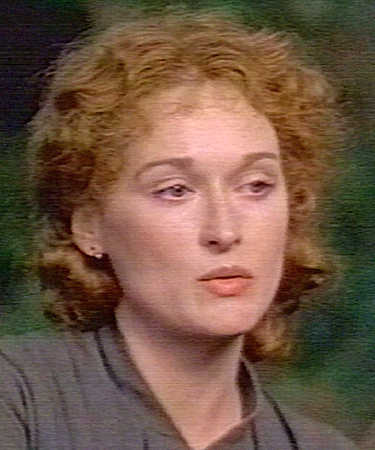
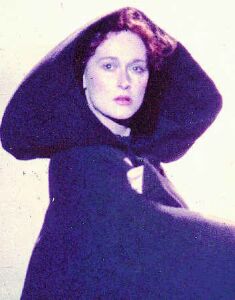
Out of Africa is worthwhile, as is any great film, for its moments; it takes the raw ingredients of time, light and sound, and creates a kind of filmic magic. It makes pure poetry out of images and music, as beautifully as I've seen in any film. I can only imagine what it would've been like to see it on the big screen. Right from the opening credits, when we watch Meryl Streep gaze longingly out at the landscape from the back of a moving train, set to the swelling, stirring score, we're drawn into this world of grand vistas and overwhelming emotions, into the fleeting embrace of the cinema and of Africa. In one of the film's signature scenes, with Karen and Denys and riding in his plane among the clouds, fully experiencing each other and the continent, the imagery onscreen only be described as "breathtaking." And between these decadent highs, the film peppers in enough humor and nuance to make sure the story's never less than relatable, the characters never less human.

Out of Africa is not groundbreaking cinema. But it is a sweeping epic in the grand, old Hollywood tradition. It's a powerful story well told, with everything coming together beautifully: writing, acting, cinematography, art direction, music. Kudos to Sydney Pollack, Meryl, Robert, Klaus Maria Brandauer (who plays the husband), the writers, and of course Karen Blixen herself, for finding this story within herself and sharing it with all of us.Streep Review: Well, she did it again. This is one of Streep's better performances, not quite in the realm of Sophie or the other Karen, but still up there. She's given a very tricky character to carry off, and she of course does it beautifully.

One of the things that bothered me at first about the performance was the accent. It's VERY thick and strange, producting an affect that's almost comical. But while it distracted me at first (and I worried about my inclination to laugh at it), I eventually realized that its an integral aspect of the character. Karen often uses her accent to be funny, and Meryl uses the accent to find humor in the lines. In some cases, they read better in the thick, lazy Danish cadence than they ever would otherwise. I applaud Meryl for going so all-out, risking caricature to bring us real character.

In fact, the performance is quite technically impressive all-around. Between the thick, obscure accent, the love scenes, the huge character arc, and the lion-taming, this is probably the most emotionally varied and technically challenging work she's ever done (save maybe Sophie's Choice). So major points for that.

But I still can't decide whether I preferred her work in this film or in Plenty. It's certainly understandable that this is the one that garnered more attention, since this film is far prettier, more palatable, and more oscarable than Plenty (oh, I'll just come out and say it, this film is better than Plenty... and I REALLY like Plenty a lot). But I still hesitate to say this was Meryl's better performance. This one of course has all the things described above, but I have a soft spot for the volatile, broken soul that is Susan Traherne; she took Streep places I'd never seen her go before. Anyway, couldn't critics' groups at least have honored her for both films, like they did for Anjelica Huston in 1990? I don't see why not.

Regardless, 1985 was a banner year for Meryl, and Out of Africa is must-see for Streep fans. Karen Blixen goes on a huge journey from naive, spoiled Danish girl to old and wisened businesswoman/writer, and Streep takes us all the way through. She's a pro like that.

Next in the marathon: A Cry in the Dark (or Evil Angels)

Labels: , ,

Friday, July 07, 2006

Streepathon Stop #4: Plenty

"I want to change everything... and I don't know how."
-Susan Traherne

Time: 1985 (11th film)

Role: Susan Traherne, postwar Brit

Awards: none

Fun Fact #1: This is the only film in the Streepathon for which Meryl received no year-end awards or nominations. This is undoubtedly because another of Streep's films, Best Picture winner Out of Africa, was released in the same year.

Fun Fact #2: In Plenty, Streep plays a woman named Susan and works from a script by British playwright David Hare. In 2002, she would again play a woman named Susan (real-life writer Susan Orlean, in Adaptation) and would again work from a script by Hare (The Hours).

Fun Fact #3: Kate Nelligan, a British actress who'd starred in Plenty onstage, was considered for the role of Susan, but director Fred Schepisi ultimately chose Streep, due in part to her American stardom and ability to attract more money.

Streep & Sting: Who'da thunk it? Meryl Streep gets busy with Sting.


Film Review: This film has been growing on me slowly. I didn't think much of it on first viewing, but the longer I've had it and the more times I've watched it, the higher it's climbed in my esteem. I now see that it's one of Streep's best films, and an underrated wonder of the 80's.

Meryl Streep plays Susan Traherne, a passionate woman living in post-WWII England. The film begins with a scene during the war, where she meets a charming rogue spy (played by Sam Neill) while in France as a special forces agent. The two fall in a sort of love, briefly, before he must leave her unexpectedly. After the war, she returns to England to live, takes a job at a trade office, eventually meets and marries a stodgy diplomat (Charles Dance), befriends a spunky bohemian writer (Tracey Ullman), and tries, for a time, to mother a child with a poor boy from the other side of the tracks (Sting), all the while searching for a fulfillment she can never find. Susan is haunted by memories of her time in the war - a more exciting life - and by the love and adventure she's lost.

She is disappointed by her roles as both working woman and society wife, and suffers fits of fierce anger and resentment, separated by long periods of desperation. There are hints that Susan may have a form of bipolar disorder or other mental ailment, but her husband defends her personality, claiming she "just feels very strongly." This is a plum role for Streep, who seamlessly inhabits the intelligence and neuroses of this woman. David Hare, who wrote both the screenplay and the stage play on which it was based, also wrote the screenplay for The Hours, and there are hints of its three depressed women in Susan.


Plenty is a telling of the history of postwar Britain through the eyes of one strong woman, an excellent exercise in the historical-as-personal. The music, by Bruce Smeaton, is hauntingly beautiful with an epic sweep - lush, ravishing, pick an adjective - and adds much to the film's mood. The score was robbed of an oscar nomination (as was Hare's script); the film got no traction at all with awards groups (due, I believe, to a bungled release - see also: Malick's The New World), settling for a pair of BAFTA nods for supporting stars Ullman and John Gielguld, and a pair of critics' awards for Gielguld, who plays Streep's husband's boss, an ambassador. Other than being slow at first and a little dull at times, this is a terrific film, with glorious themes, fine writing and acting, and absolutely gorgeous music. Ultimately it's a film about expectations and disappointment, and the limits with which we must live.

In the film's final scene, a flashback to the end of the war, Susan stands atop a hill and looks around, exclaiming, "There will be days and days and days like this!" ...plenty of good days to come... but of course, she is wrong. That day was the only day like that; he future was not as bright as it seemed. Our lives are rarely as we'd hope them to be... they're usually stuck somewhere between our memories and our dreams. But of those, at least, we have plenty.

Streep Review: What can I say? Meryl's awesome. I can't help but compare her performance here to her perf in The Hours, as she is working from a David Hare script in both, and in both, playing depressed... and her Plenty perf is definitely the finer. Fred Schepisi talks on the DVD about how thoughts "flicker across her face like clouds through the sky" and it's true. The ease and subtlety with which she expresses her inner emotions is amazing... and it's particularly needed in portraying someone as troubled and enigmatic as Susan. This is one of the more complex parts I've Streep play, and the complexity just makes her so much richer. She feeds off of it - consumes it into her actorly mojo - and then reflects it back at the viewer. It's lovely.

Though I must say, once again, that Streep is not as flawless with accents as common wisdom upholds. Once in Plenty, while snapping at Sting, she seems to totally fall out of the British for a moment, before settling back in. I'm surprised her director let her do that; IMO, it was quite noticeable. While she's in dialect, she's usually perfect, though she does have a tendency to break. One hears these things when one's been hearing Meryl nonstop for weeks. It's disappointing, though expected, to some degree. I'm watchin' you, Meryl... no more slip-ups.

But still, slip-ups side, this is one of her best performances, in a stunningly undervalued film. We'll see how it stacks up against what comes...

Next in the marathon: Out of Africa

Labels: , ,

Thursday, July 06, 2006

Streepathon Stop #3: Silkwood

"I'm doin' somethin' good." -Karen Silkwood

Time: 1983 (9th film)

Role: Karen Silkwood, blue-collar worker and whistleblower

Awards: 5th oscar nom, GG (drama) nom, BAFTA nom; KCFCC (Kansas City Critics) win

Fun Fact #1: This was the first time Streep had played a real person, and also the first time Streep had sung in a film (she gives an intimate rendition of "Amazing Grace").

Fun Fact #2: This was Streep's first collaboration with Mike Nichols. He has since directed her again on stage (The Seagull), in film (Postcards and Heartburn), and in television (Angels in America).

Fun Fact #3: Streep was pregnant with her second child during filming (and were those real cigarettes she smoked?).

Fun Fact #4: Meryl and Cher became close friends during the making of Silkwood and would remain close for some time. When Cher won an oscar over also-nominated Streep in 1988, she thanked Meryl in her speech for her friendship and guidance.

Meryl & Karen: (right & left) Joined in spirit if not in looks.

Film Review: If Erin Brockovich were a tragedy, it would be called Silkwood.

Part Erin Brockovich and part Dancer in the Dark, this beautiful film is a portrait of a brave, flawed woman who got a trip to heaven for her troubles instead of Erin's million-dollar check. As states the film's catchphrase, "Karen Silkwood was on her way to meet with a reporter from the New York Times. She never got there."

This is a simple film about simple people, made with the utmost care and attention to craft. It tells the story of Karen Silkwood, an employee in an Oklahoma nuclear plant, her boyfriend Drew Stephens, and her lesbian best friend, Dolly Pelliker. Their story begins happily and casually, but Karen's life and her friends' lives change drastically once she realizes that their workplace is frighteningly unsafe. Once Karen herself is contaminated by nuclear radiation and becomes ever more aware of the plant's corruption, she starts working with the union to make her story public. Unfortunately, all does not end well.


Streep, Kurt Russel, and Cher shine in the three main roles, with both Streep and Cher playing against the types they'd been pegged with up to the time. Streep plays her earthiest and funniest character yet (and also flashes the audience briefly... blink and you'll miss it), while Cher deglams to perfection as a dowdy butch lesbian. And Russell... well... let's just say that I'd NEVER been so attracted to him before. At all. But here, he's absolute perfection (and totally swoon-worthy) as Karen's gruff but loving boyfriend, Drew. Robbed of an oscar nom, he was (I seriously wanted him so bad while watching this... I'm not kidding... I don't really even understand why, but lust is like that). Together, the three of them are quite the formidable group. Throw in a fun supporting cast, including Sudie Bond and a young David Strathairn as co-workers at the plant, and you've got quite the tight ensemble.

At first glance, this is just your usual tale of the working class fighting back against "the man", but the lovely romance, comedy, and humanity on display set it apart from other examples of this genre. Mike Nichols' assured, low-key direction feels just right, bringing out the universality of longing in these characters and their situation, and the beautiful musical score is alternately placid and stirring, expertly creating a peaceful, pastoral feel to the proceedings and then shattering it when things go wrong. One masterful touch in the music is how it swells into an epic sweep during the most intimate moments between characters; Mike Nichols knows when to punctuate a seemingly "small" scene, and how effective that emphasis can be. One scene between Streep and Cher, in which Karen sings Dolly a lullaby on the porch, is pure gold.

In that scene and throughout the rest of the film, the acting all feels real and organic; the characters are strong and compelling, and never feel less than human... though sometimes more than human, particularly one Karen Silkwood. Despite all the film's obvious social relevance (worker safety and unionization, gay tolerance, etc.), this is really just a story about Karen Silkwood, and the unlikely course her life took. This is her story - her journey - and by the end, she seems an almost mythical figure, growing ever stronger and more beautiful as she heads toward her imminent demise. The film around her is not half bad either; in fact, I'd say it's a masterpiece. Easily one of Nichols' (and Streep's) best films.

Streep Review: Long story short: Meryl is awesome in the film. While this is not my absolute favorite of her performances (that honor is still reserved for Sophie's Choice), it's definitely one of her best. Silkwood revealed a new playfulness and grittiness in Streep that viewers hadn't seen before (not even in Sophie Zawistowsky). She handles the romance, comedy, pathos, and flashing with ease.

I have, however, started to notice chinks in Streep's dialect armor; there are several moments in this where the dialect doesn't feel quite "right on." This is probably the result of my watching TOO MUCH Meryl Streep for too long, but I'm starting to appreciate the slight slips in form that she herself has admitted. She is not a god, after all, as much as I love to think otherwise. Still, Meryl is awesome here, at once ballsy and totally vulnerable, compassionate and coolly distanced, bawdy and deeply sensitive. Her Karen Silkwood is a marvel, the best perf in the Streepathon so far.

Rest in peace, Ms. Silkwood, and keep on truckin', Ms. Streep.

Next in the marathon: Plenty

Labels: , , , ,

Wednesday, June 07, 2006

Streepathon Stop #2: The French Lieutenant's Woman

"I am the French lieutenant's... whore." -Sarah Woodruff

(laughs) "...they'll think I'm a whore!" -Anna

Time: 1981 (6th film)

Role: Sarah/Anna

Awards: 3rd oscar nom; LAFCA, BAFTA, and GG (drama) wins

Fun Fact #1: This was Streep's first leading role.

Fun Fact #2: In the film, Sarah (Streep's character) is an artist, and is often shown drawing portraits. Streep herself is a talented artist, having studied costume design in college.

Fun Fact #3: 1981 was the only year in history when Streep was up against Katharine Hepburn for an oscar (it was Streep's first Best Actress nomination, and Hepburn's last). Streep ultimately lost to Hepburn's performance in On Golden Pond, but would win the oscar the following year for Sophie's Choice.

The many faces of Meryl: Streep has a dual role of sorts here, playing both Sarah (left), the film's titular love interest, and Anna (right), an actress portraying Sarah.


Film Review: I found this film solid, but not spectacular. It's the kind of film where there are a lot of standout elements even though the whole isn't really a standout film (at least for me).

Streep, of course, is fabulous, playing Anna, an actress who's appearing in a film version of The French Lieutenant's Woman. In the film-within-a-film, Anna plays Sarah Woodruff, a mysterious woman who haunts the seaside waiting for her French lieutenant lover who abandoned her long ago. Sarah's beauty and mystery bewitch Charles, an English scientist recently engaged to be married to a woman of high social stature. Charles is played by an actor named Michael, who is in turn played by Jeremy Irons. The two actors, Mike and Anna, have a love affair offscreen that parallels the romance of their characters, and the film cuts back and forth (rather jarringly) between the "film" world and the "real" world.

I love the premise here, and normally I would love this type of film, but on the whole, it just seemed, well, rather boring, and lacking in energy. Everything worked fine - the sets and costumes were lovely, the music was beautiful, the leads had good chemistry, it was well-written - but for me, it lacked that extra spark of greatness. I suppose this was the fault of the director, Karel Reisz; not that he did anything wrong, per se, but the type of film he made only has so much to offer (bonus points, though, for the gloriously "meta" opening titles sequence with a tracking shot of Streep set to the brilliant, dramatic score... and for the brilliant trailer, overflowing with the best kind of lush old-school romance, and fetishistic close-ups of Streep).

The French Lieutenant's Woman reminds me of Girl with a Pearl Earring in its depiction of a mysterious and desirable woman in a repressive society, and in how both films somehow add up to less than the sum of their parts. But regardless, a good film. Recommended.

Streep Review: This was obviously Streep's first claim to fame as "the leading lady of American cinema," and it arrived just in time to start the 80's (the decade of Streep). She won the lion's share of best actress awards for 1981, even if she did lose the oscar. I personally don't feel that this is among Streep's best perfs (though it may have been her best work up to that point), but it was still a great performance (when is she NOT great?).

Some critics have charged her of overacting in this film, but I disagree. The role of Sarah demands a degree of theatricality in order to contrast with the more naturalistic role of Anna, and I think Streep juggled the two quite well. Her English accent is perfect, of course, but more importantly, she nailed the mystery of Sarah - her eyes say so much with so little - and she brought some of that mystery, subtlely, back into Anna as well. A great performance... probably the best part of the film.

Next in the marathon: Silkwood

Labels: , ,

Sunday, May 28, 2006

Streepathon Stop #1: The Deer Hunter

"Michael...?? ...oh, MICHAEL!!!" -Linda

Time: 1978 (2nd film)

Role: Linda, longsuffering war fiancee

Awards: 1st oscar nom, 1st GG nom; NSFC win (best supporting actress)

Fun Fact #1: This was Streep's first time working with Robert DeNiro. The two went on to work together again in Falling in Love (1984, not in the Streepathon) and Marvin's Room (1996, in the Streepathon), and are currently slated to reunite on the upcoming film First Man.


Fun Fact #2: This was the first of three of Streep's films to win the oscar for Best Picture. The second was Kramer vs. Kramer the following year, and the third was Out of Africa in 1985.

Fun Fact #3: Streep began dating co-star John Cazale during filming, but the relationship ended forever when Cazale died of bone cancer in March 1978, before their film was released. Streep would go on to marry sculptor Don Gummer in September of that same year, and the two remain married to this day.


Revealing photos: Streep laughs awkwardly as DeNiro gives her dirty looks (Robert DeNiro is mighty creepy, no?)

...but they must eventually have gotten close or else she wouldn't have worked with him again.

Film Review: The Deer Hunter is one harrowing film. Focusing on the lives and life changes of three friends who served in Vietnam, the film is a sobering portrait of war and what it does to the psyche. But the film is not about war. It's about people; it's about character development.

At the beginning of the film, we meet three friends - Michael, Nick, and Steven - who live in small town America and are preparing to go off to war. Steve (John Savage) gets married to a local girl just before they leave, and the others attend the wedding. Nick (Christopher Walken) proposes to his girlfriend Linda (Meryl Streep), who accepts. Michael (Robert DeNiro) is not with anyone (though he seems to have a thing for Linda). He is rather stoic and surly; he is a deer hunter, the best hunter of the the group of friends, and will become their de facto leader and anchor during the war. The first hour or so is spent introducing us to the characters and their simple, small-town lives.

Then, at the start of the second hour, we see the men in the heat of battle, and the impact is jarring. Only one of the film's three hours is devoted to actual Vietnam war footage, but that one hour is enough to make you never want to be there... strong stuff... some very disturbing sequences. The three men endure fighting, torture, wilderness, etc. all the while trying to stay together, and make it home. Unfortunately, they don't all make it. The one who makes it back in the best shape (at least physically), is Michael, who returns to his town a different person.

The final hour is devoted to the fallout in these characters' emotional lives, and is no less harrowing. Some surprises are in store. No one is unchanged by the war. The ending is somewhat unsatisfying, but it's clearly meant to be that way. I myself didn't enjoy this film, per se, but of course it's not meant to be enjoyed. It's meant to be experienced... and frankly, given that I'm not predisposed to liking war films (or Robert DeNiro), the chances of my enjoying it were nill.

But regardless, I certainly respect it, and have no beef with its having won its year's oscar for Best Picture. When I saw it, it seemed a bit too long and drawn out, and not involving enough emotionally... but it's already improving in the memory, even if I'd never want to see it again.


Streep Review: Well... needless to say, this was not Streep's greatest performance. It was a great perf, don't get me wrong, but there was only so much she could do with the longsuffering girlfriend role, even if the character was more layered/conflicted than this type of role usually affords. Unlike more recent entries into the canon of longsuffering women, Streep's Linda was not definted entirely in terms of her man... she was defined more in terms of "manhood" in general, as someone different than the men in the film. She was basically the "token woman."

Still, Streep did some great things with the role. It's not much when stacked up against her later work, but Linda's a strong character, considering. To reveal more about her, I'd have to reveal more plot, which I don't want to do. Suffice it to say, Streep was good here... the film was not Streep-centric, of course, making it an awkward beginning to the marathon... but it was a good reminder of the humble beginnings from which La Streep sprung. Little did they know that the best was yet to come (and, perhaps, still is).

Next in the marathon: The French Lieutenant's Woman

Labels: , ,

Tuesday, March 28, 2006

Meryl Streep Marathon


I have recently realized that I've not seen nearly enough of Meryl Streep (and no, I don't mean "not enough skin"... although I am one of those who truly believes Meryl is beautiful and sexy... has she ever done much screen nudity? ...I believe she showed her breasts in Sophie's Choice). Anyway, no, I don't mean skin, I mean films... I am a devout Meryl fan, and I've not actually seen many of her films!

I have seen her two (only two!?) oscar-winning roles (Sophie, Kramer), her two best comedic performances (Postcards, Adaptation), her chameleonic Emmy-winning AiA showcase, her less-great-than-usual Hours perf, and her sappy oscar-bait (but still great) work in Music of the Heart... oh, and her most recent turn as a Jewish mother/therapist in Prime (which I loved)... and her little cameo in Manhattan... and that's it. That's eight films and one TV miniseries... well, OK, once, many years ago, I sorta half-watched French Lt's Woman, but I'm not counting that, since I barely knew who Meryl Streep was back then, and I remember next to nothing about the film. Now that I worship at her altar, I feel I should see it again... along with nearly everything else she's done.

So, I just primed my netflix queue for a Meryl Movie Marathon, or a Meryl Streep Marathon, or a Meryl-Thon for short. In honor of her 13 oscar noms, I intend to watch 13 Meryl films in sequence (though not the exact films that earned her those nominations)... the marathon will consist of 12 of her best as-yet unseen (by me) performances, viewed chronologically, capped by her greatest-ever perf, in Sophie's Choice (which I've already seen... but c'mon, I could watch that performance all day). I will get to watch Meryl age and evolve from her first oscar nom in the late 70's, through her long LONG peak in the 80's, through her "stretch" experiments in kitchy comedy and action, on through her new highs in the mid-to-late 90's. And then the Meryl apotheosis that is Sophie. I'm so excited! The only film I tried to get that I couldn't was Ironweed, which apparently is not available on netflix (maybe it's at Blockbuster?)... but anyway... the list of films is thus:

1) The Deer Hunter
2) The French Lieutenant's Woman
3) Silkwood
4) Plenty
5) Out of Africa
6) A Cry in the Dark
7) She-Devil
8) Death Becomes Her
9) The River Wild
10) The Bridges of Madison County
11) Marvin's Room
12) One True Thing
13) Sophie's Choice

I'm SO pumped. More Meryl madness to come...

Labels: ,